
Brow Lift?
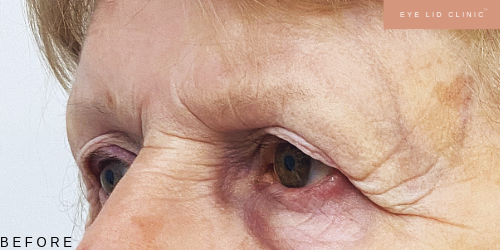
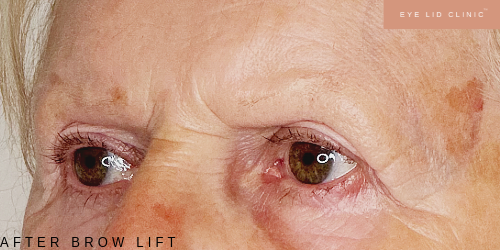
- A brow lift, also known as an eyebrow lift or forehead lift, corrects signs of ageing by repositioning the brow and forehead to enhance the eye area and restore a youthful brow line.
- The procedure aims to maintain a natural appearance of the upper face.
Why Undergo Brow Lift Treatment?
- To correct signs of ageing such as forehead creases and brow descent.
- To address a tired or concerned appearance due to a crowded eyebrow/eyelid complex.
- Often combined with upper lid blepharoplasty for enhanced results.
- Can improve vision by lifting a drooping brow.
What Happens During a Brow Lift Consultation?
- Review of medical history to assess surgery risks.
- Physical examination to determine the best surgical method.
- Discussion of expected outcomes to ensure realistic expectations.
How is a Brow Lift Performed?
- Endoscopic Brow Lift: Minimally invasive, uses small incisions and an endoscope, suitable for mild to moderate brow droop.
- Internal Browpexy (Transblepharoplasty): Minimally invasive, combined with upper eyelid surgery, with limited effectiveness.
- Direct Brow Lift: Provides effective and long-lasting results but leaves a scar along the upper brow line.
- Chemical Brow Lift: Uses BoNT/fat/fillers for non-surgical reshaping and lifting.
- Procedures typically take 1-2 hours, usually under general anaesthesia, and require assistance for post-surgery transport.
What is the Recovery Period After a Brow Lift Like?
- Recovery time varies; typically 1-2 weeks off work is recommended.
- Bruising and swelling are common; bandages worn for 24 hours.
- Elevate head and use ice packs to reduce swelling.
- Avoid showering for 24 hours; use gentle shampoo and dry carefully after.
- Avoid strenuous activities for up to two weeks; gentle walks are encouraged.
- Stitches or staples are usually removed around ten days post-surgery.
- Follow-up consultation ensures proper healing.
How Should I Prepare for a Brow Lift?
- Quit smoking months before surgery to aid healing.
- Avoid aspirin and anti-inflammatories two weeks prior to surgery.
- Fast (no food, water, cigarettes, gum) for 7 hours before surgery.
- Do not wear makeup or creams on the day of surgery.
- Arrange transportation and post-surgery care in advance.
Does Brow Lift Surgery Leave Scars?
- Scarring is minimal and strategically placed to be hidden.
- Endoscopic methods hide scars under the hairline or forehead creases.
- Scars fade within 3-6 months; temporary numbness may persist.
Are Brow Lifts Painful?
- Mild pain and discomfort are common for a few days post-surgery.
- Pain medication is prescribed; avoid aspirin and ibuprofen.
- Swelling and bruising subside within two weeks.
- Temporary numbness or loss of sensation may occur.
At What Age Should You Get a Brow Lift?
- Typically performed on individuals aged 40-65.
- Can be done on younger individuals with signs of ageing or heavy brows.
- The decision is personal and should be made with the surgeon.
Are Brow Lifts Permanent?
- Provides long-term results but does not halt ageing.
- A healthy lifestyle is advised to maintain results.
Faq
1What is brow lift?
A brow lift (also called an eyebrow lift or forehead lift) is a procedure that elevates drooping brows, smooths forehead wrinkles, and refreshes the upper face. By lifting the brow and restoring its natural arch, it reduces heaviness over the eyes and can improve both appearance and, in some cases, peripheral vision.
People undergo brow lift surgery for several reasons:
• To correct signs of ageing such as brow descent, forehead creases, and hooding of the upper eyelids.
• To address a tired or concerned expression caused by low brows or brow–eyelid crowding.
• To enhance results when combined with upper eyelid surgery (e.g., blepharoplasty).
• To improve visual obstruction caused by significantly drooping brows.
2How many years do brow lifts typically last?
Brow lifts usually last around 1 to 3 years on average, although some people may see results for longer. Your age and skincare routine can affect how long the results last.
3Is eyebrow lift surgery safe?
Yes, brow lift surgery is generally safe. But, like any surgery, it carries some risks, such as allergic reactions to anaesthesia, bleeding, infection, & blood clots. However, the risks are relatively low.
4Is a brow lift painful?
During a brow lift, you won’t feel any pain because your surgeon will use an anaesthetic. After the procedure, you may experience bruising, tightness, headache, itching and swelling at the surgical site and/or scalp, but any discomfort can be managed with medication and time.
5Do brow lifts leave scars?
Yes. After a brow lift, you may have some scarring, but these should fade over several months to a year. There are ways to help the healing process & reduce the visibility of the scars.
6What are the risks associated with a brow lift?
Some of the potential risks and complications include scarring, infection, limited eyebrow movement, itching, bad reaction to anaesthesia, pain, hair loss around the incisions, asymmetry, and numbness. However, these are relatively rare.
7What age is best for brow lift surgery?
There isn’t a set age for getting a brow lift, but most people who have this procedure are usually between 40 and 65. However, some younger individuals who are unhappy with their heavy brows or deep lines have also chosen to undergo this surgery.
8Are there different types of brow lift?
Yes.
Several techniques exist, each suited to different degrees of brow descent and patient goals.
1. Endoscopic Brow Lift
• Uses 3–5 small incisions behind the hairline.
• A camera (endoscope) assists in lifting tissues.
• Secured with internal fixation.
• Suitable for mild–moderate brow droop.
• Advantages: minimal visible scarring.
2. Internal Browpexy (Transblepharoplasty)
• Performed through the same incision as an upper eyelid blepharoplasty.
• Provides a subtle lift; minimally invasive.
• No additional recovery time.
• Less powerful and not suitable for significant brow descent.
3. Direct Brow Lift
• Incision placed immediately above the eyebrow.
• Very effective for substantial brow ptosis.
• Produces a visible scar, though it usually fades; more noticeable in those with thin brow hair.
4. Temporal (Lateral) Brow Lift
• Lifts only the outer third of the brow.
• Incision placed behind the hairline; sometimes skin excised.
• Useful for lateral hooding and asymmetry.
5. Chemical Brow Lift
• Non-surgical technique using botulinum toxin and dermal fillers.
• Achieves a mild–moderate lift by balancing muscles and supporting tissues.
• Temporary results; requires repeat treatments.
6. Other Surgical Options
• Larger-incision techniques such as coronal or pretrichial lifts may be used in select cases requiring extensive lifting or reshaping.
9What should I do in preparing for brow lift surgery?
Patients are advised to:
• Stop smoking several months before surgery to enhance healing.
• Avoid aspirin and anti-inflammatory medications for two weeks pre-operatively.
• Fast before sedation or general anaesthesia.
• Avoid makeup or skincare products on the day of surgery.
During the Procedure
• Surgery typically lasts 1–3 hours, depending on the technique.
• Most surgical approaches require general anaesthesia or sedation.
• If combined with blepharoplasty, both procedures are performed simultaneously.
• Non-surgical chemical lifts require much less time and no anaesthesia.
After the Procedure
Recovery differs by technique, but general expectations include:
• Bruising and swelling for 1–2 weeks.
• Bandages for the first 24 hours.
• Sleeping elevated and using cold compresses to reduce swelling.
• Gentle hair washing after 24 hours; careful drying to avoid irritation.
• Avoid heavy exercise, lifting, or sexual activity for ~2 weeks.
• Light walking is encouraged to promote circulation.
• Stitches/staples are typically removed 6–10 days after surgery.
• Follow-up appointments are essential for safe healing.
Results
• Brows appear elevated, smoothing forehead lines and reducing upper-lid hooding.
• Eyes may look more open and refreshed.
• Results become clear once swelling subsides.
• Longevity varies; ageing continues but improvements are usually long-lasting.
• A healthy lifestyle (sun protection, no smoking, good diet) helps maintain results.